Owning a vehicle in Happy Valley, OR, means navigating diverse weather, road debris, and the occasional gravel splatter, all of which can take a toll on your car’s pristine paint job. If you’re wondering how to maintain that showroom shine without frequent detailing or expensive repainting, you’ve likely come across Paint Protection Film (PPF) as a solution. But with the average Paint Protection Film cost ranging from hundreds to thousands of dollars, the real question is: is it worth it?
In this post, we break down the actual cost of PPF, what influences pricing in Happy Valley, and why it could be one of the smartest investments you make in your car’s appearance and longevity.
Why Paint Protection Film Matters for Your Vehicle
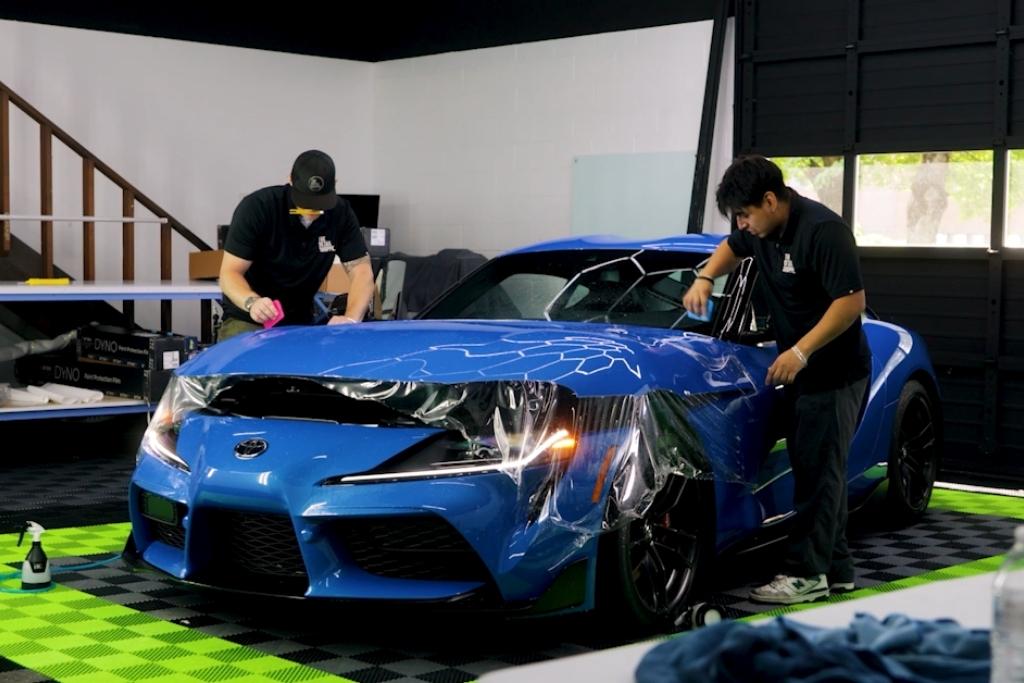
Careful PPF application ensures long-term paint protection and lasting clarity.
Paint Protection Film (PPF), often called a “clear bra”, is a virtually invisible, self-healing urethane layer applied to your vehicle’s painted surfaces. Its main job? To safeguard your car from daily driving hazards, including:
Rock chips and loose gravel
Light scratches and swirl marks
Bug splatter, tree sap, and bird droppings
Harmful UV rays that cause paint fading and oxidation
Unlike wax or ceramic coatings, which offer surface-level protection, PPF provides a physical, impact-resistant barrier. It absorbs the impact of debris before it can damage your paint, making it ideal for Happy Valley drivers who encounter rough roads, highway debris, or extreme weather.
Premium PPF films are designed with advanced features like hydrophobic surfaces, optical clarity, and self-healing properties, allowing minor scratches to vanish with heat exposure. Many also come with warranties of up to 10 years, ensuring your vehicle stays protected and looking like new for the long haul.
Whether you own a daily driver or a luxury car, PPF is an investment in your vehicle’s longevity, appearance, and resale value.
How Much Does Paint Protection Film Cost in Happy Valley?
The Paint Protection Film cost in Happy Valley depends on your vehicle type, desired coverage, film quality, and installer expertise. Below is a breakdown of common pricing tiers:
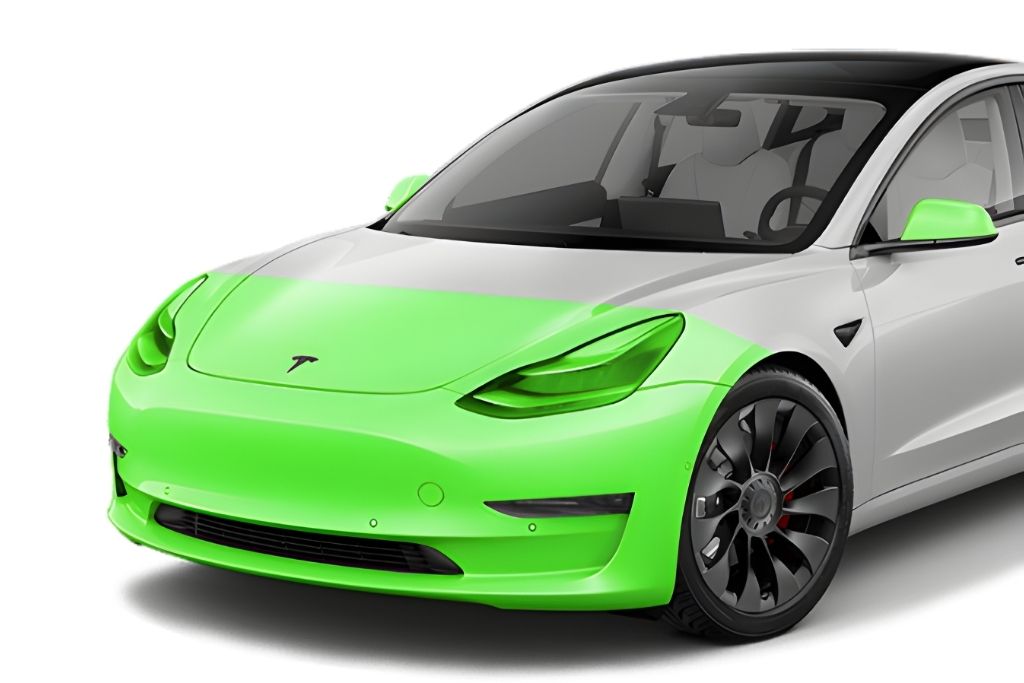
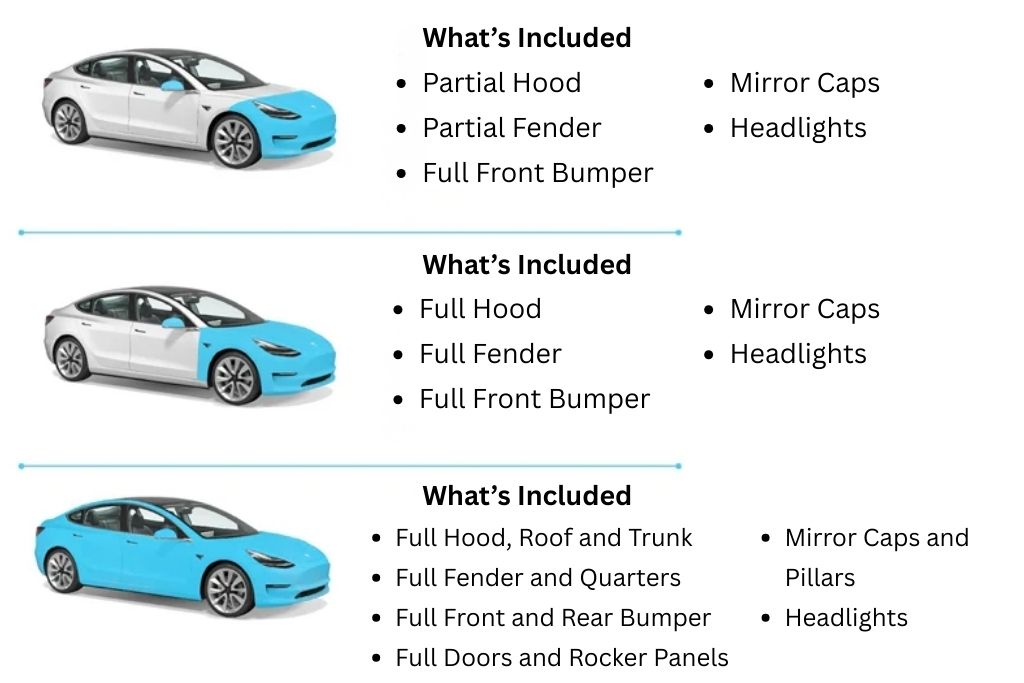
Partial coverage PPF protects your Tesla’s most vulnerable zones, ideal for cost-effective protection in Happy Valley.
Partial Coverage
💲 $500 – $1,500
Protects high-impact areas, including the front bumper, partial hood, mirrors, and fenders. Ideal for budget-conscious drivers who want targeted protection where it matters most.
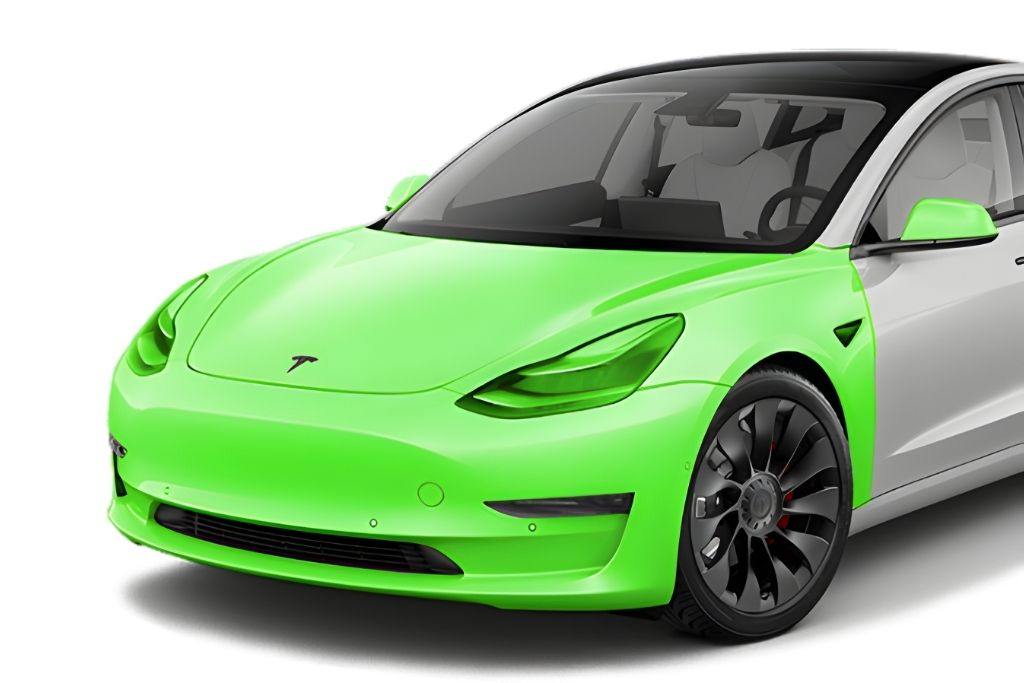
Full front PPF coverage defends the most exposed parts of your vehicle, striking a smart balance between protection and cost.
Full Front Coverage
💲 $1,500 – $3,000
Covers the entire hood, front fenders, bumper, mirrors, and headlights. This popular package offers a solid balance of cost and comprehensive front-end defense.
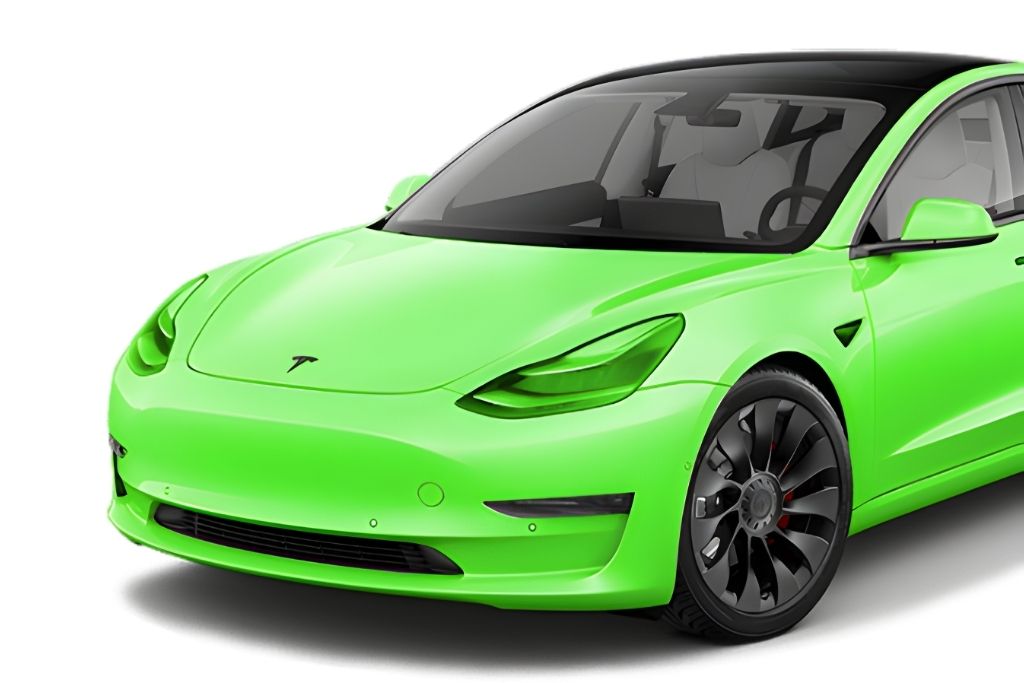
A full PPF wrap offers complete paint protection, ideal for luxury or collector vehicles needing maximum preservation.
Full Vehicle Wrap
💲 $5,000 – $8,000+
Wraps the entire painted surface of the vehicle for complete protection. This is the go-to option for luxury, exotic, or collector cars where preserving every inch of paint is a priority.
Additional costs can arise based on the car’s design complexity, the film brand (e.g., XPEL, STEK), and extra features such as ceramic top coats or extended warranties.
📌 Want to explore your options? The Detail Shoppe offers custom PPF packages tailored to your car’s needs, lifestyle, and budget.
What Affects Paint Protection Film Pricing?
Several factors influence the total Paint Protection Film cost, and understanding them can help you choose the right package for your needs and budget:
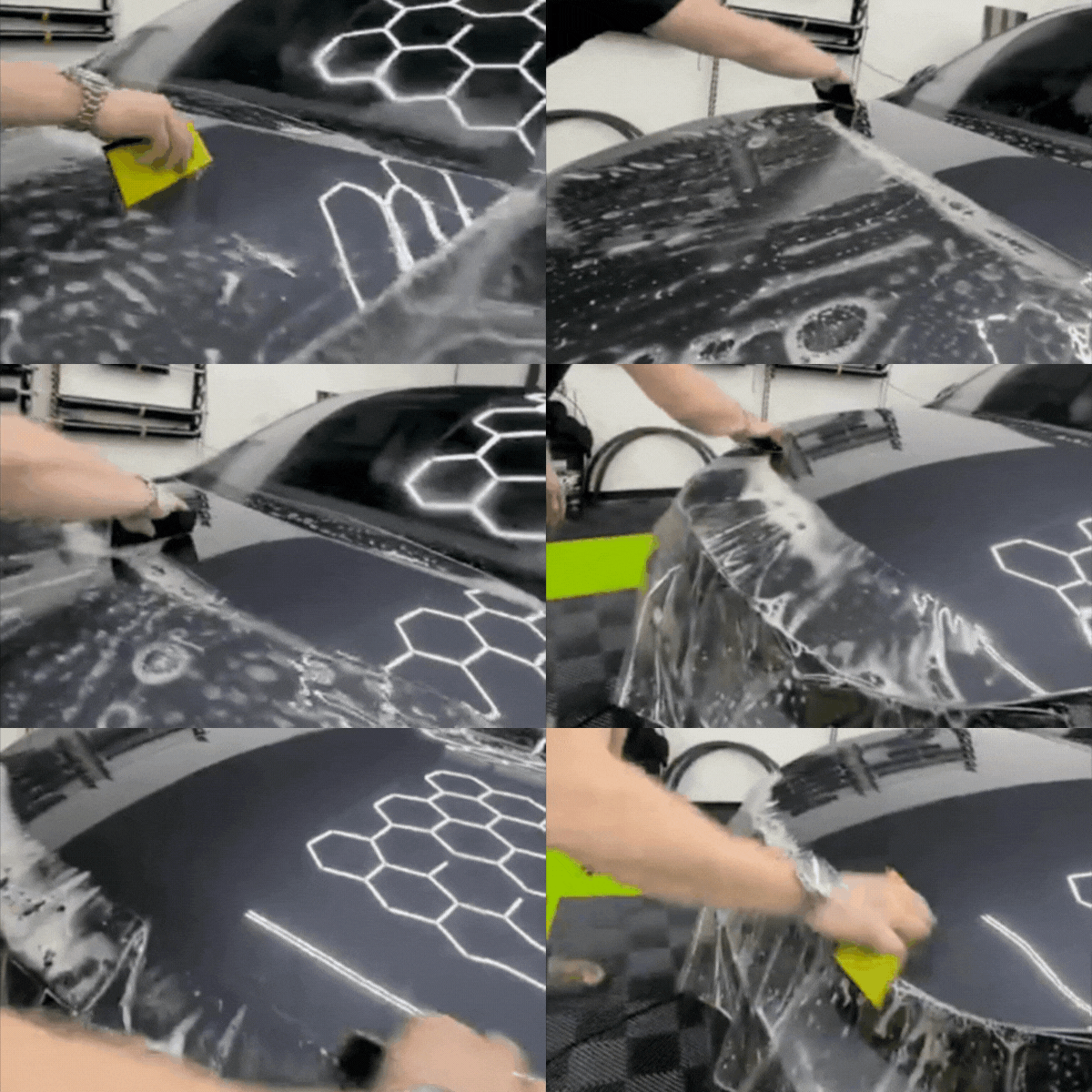
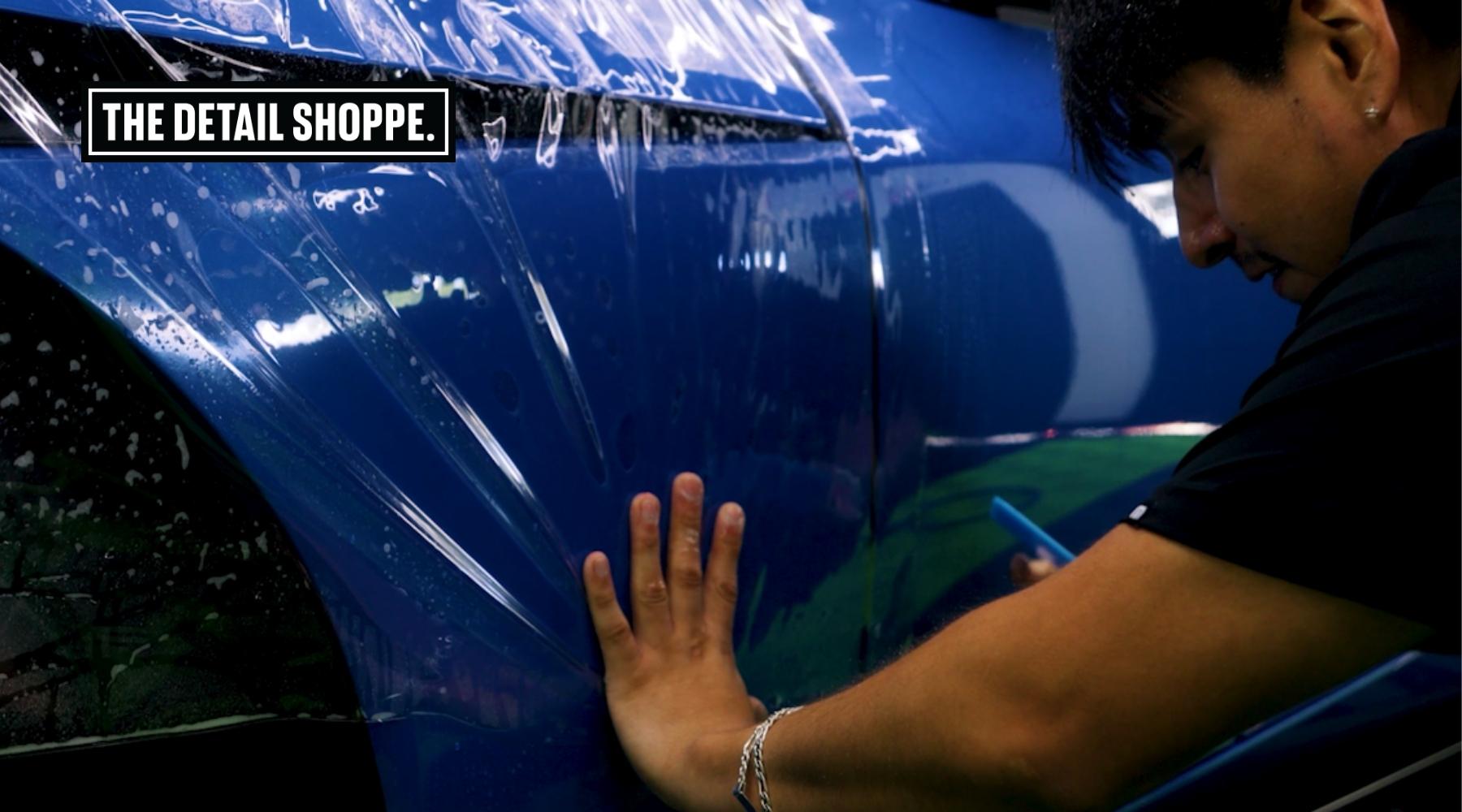
Expert installers applying PPF at The Detail Shoppe show how professional skill directly affects Paint Protection Film pricing and long-term results.
1. Vehicle Size & Complexity
Larger vehicles like SUVs and trucks, or those with sharp curves and complex panels, require more material and time, increasing both labor and film usage costs.
2. Film Brand & Quality
Top-tier films such as XPEL and STEK offer superior optical clarity, durability, and resistance to yellowing. Many also include self-healing and hydrophobic properties, enhancing performance and price.
3. Installation Expertise
Professional installation ensures flawless coverage with no bubbles, lifting, or visible seams. Shops likeThe Detail Shoppe use precision techniques and offer warranties, something you won’t get with a DIY kit or an inexperienced installer.
4. Level of Coverage
The extent of protection you choose, partial front, full front, or full-body wrap, significantly affects the final cost. More coverage equals more material and installation time.
💡 Keep in mind: investing in quality film and skilled installation upfront can save you money on future paint repairs or premature film replacements.
If keeping your car looking sharp and well-maintained matters to you, then yes, Paint Protection Film (PPF) is a smart, long-term investment. Especially for drivers in Happy Valley, where unpredictable weather, gravel roads, and daily driving hazards can take a toll on your vehicle’s paint, PPF offers both peace of mind and real savings.
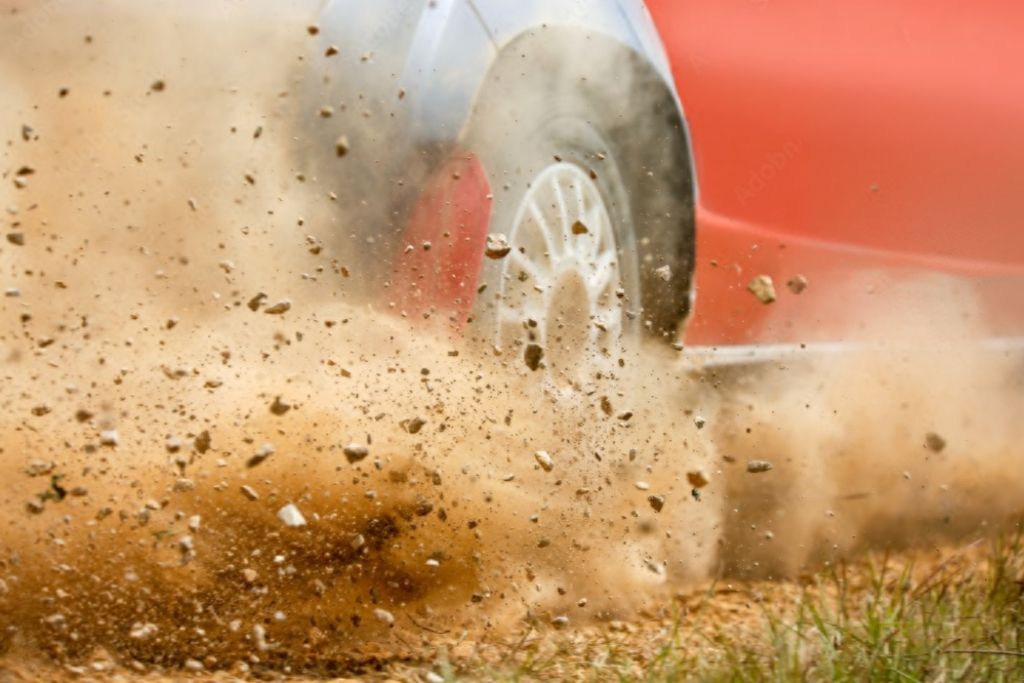
Gravel and debris like this are exactly why many ask, Is Paint Protection Film really worth it? For Happy Valley drivers, the answer is often yes.
Key Benefits That Justify the Price
Rock Chip Protection for Cars
PPF creates a durable barrier that absorbs impact from gravel, sand, and road debris, preventing chips that can lead to rust or costly paint repair.
UV Protection for Car Paint
Exposure to the sun can cause your paint to fade and dull over time. PPF provides a built-in UV filter that helps preserve your car’s original color and gloss.
Car Paint Preservation & Resale Value
Vehicles with protected, factory-original paint typically fetch a higher resale or trade-in value. PPF is especially useful for leased vehicles where cosmetic damage could lead to return penalties.
Scratch-Resistant Clear Film
Many PPF products feature self-healing technology, which causes light scratches to disappear with heat, keeping your car’s finish looking flawless without constant polishing.
Long-Term Savings
While the upfront cost may seem high, PPF can save thousands over time by eliminating the need for repainting, touch-ups, or frequent detailing.
Enhanced Appearance
High-quality PPF enhances gloss and maintains the vehicle’s clean, showroom finish for years.
Partial, Full Front, or Full Coverage: What's Right for You?
Visual guide comparing Partial, Full Front, or Full Coverage PPF options to help you choose the right protection level based on your needs.
Choosing between partial, full front, or full vehicle PPF coverage depends on how and where you drive, your budget, and how long you plan to keep your vehicle.
Partial PPF
Ideal for daily drivers or leased vehicles, this option targets the most vulnerable areas, typically the front bumper, partial hood, and mirrors. It offers solid protection without the full price tag.
Full Front PPF
A smart choice for commuters or frequent highway drivers. It covers the full hood, front fenders, bumper, and mirrors, shielding the entire front end from chips and debris.
Full Vehicle PPF
Best for luxury, exotic, or collector cars, or for those who plan to own their vehicle long-term. This option provides complete protection for every painted surface, preserving appearance and maximizing resale value.
Each option has its advantages, and the right choice depends on your specific driving habits and priorities.
Why Professional Installation Beats DIY Every Time
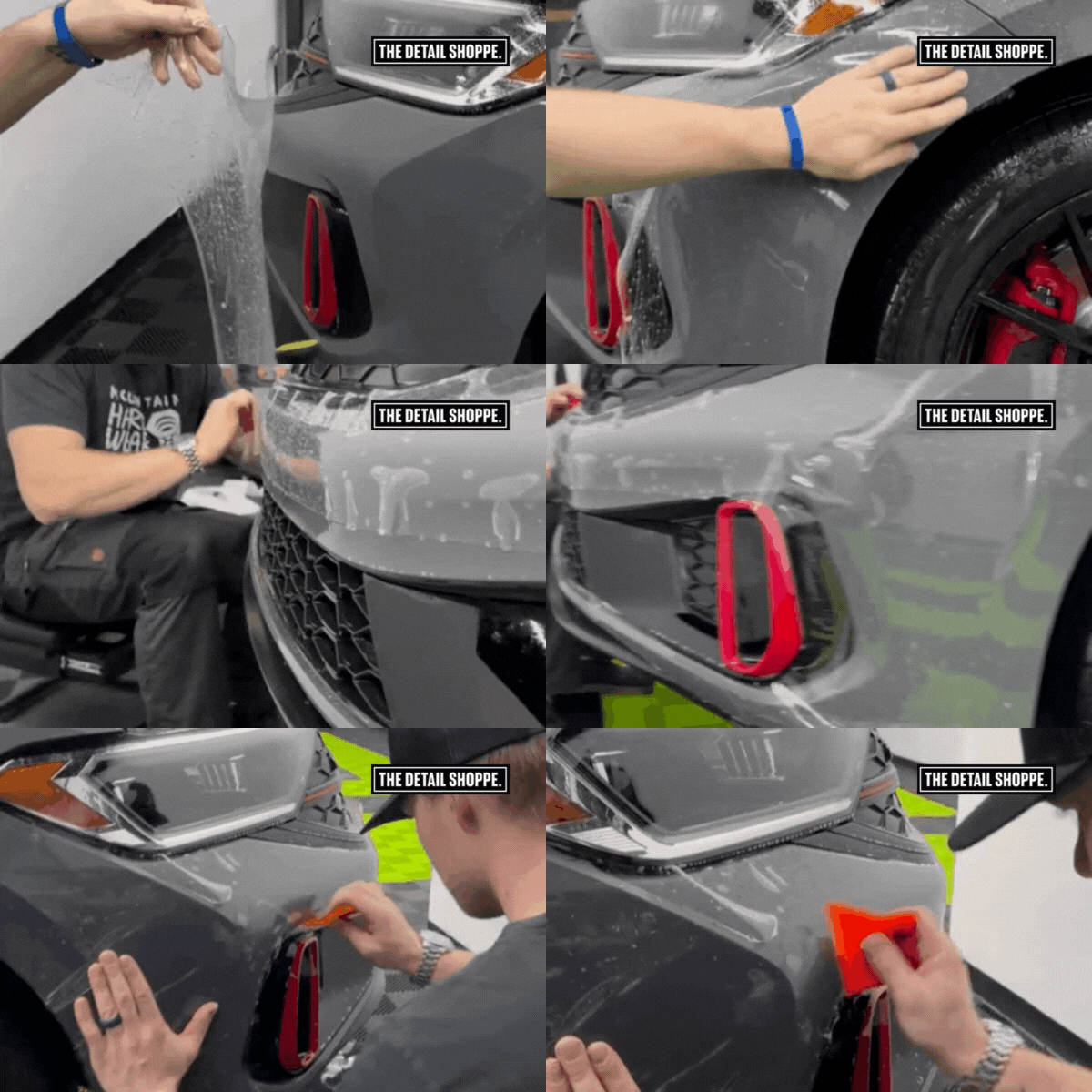
Professional installation ensures precise PPF application without bubbles or lifting, one reason it's worth choosing experts over DIY.
While DIY PPF kits might seem like a budget-friendly option, they often lead to disappointing results, such as bubbles, peeling, poor alignment, or uneven coverage, which can compromise your car’s appearance and protection.
Here’s why professional installation is worth every penny:
Seamless Application
Certified installers use precision-cut templates and tools to wrap around edges, curves, and contours perfectly, something that’s difficult to achieve at home.
No Risk of Lifting, Bubbling, or Yellowing
Pros know how to prep surfaces correctly and apply film in clean, controlled environments, minimizing errors and maximizing durability.
Warranty-Backed Protection
Reputable shops like The Detail Shoppe offer warranties (often up to 10 years), giving you long-term peace of mind that DIY kits can’t match.
Expert Product Knowledge
Professionals understand how different film brands behave and how to apply them for optimal performance and appearance.
The truth is, poor application can waste your time and money, and still require a pro to fix it.
Paint Protection Film cost might feel steep upfront, but when weighed against repainting or dealing with visible paint damage, it becomes a smart, value-driven investment. Whether you opt for a partial wrap or full-body protection, the key is choosing quality materials and trusted professionals.
For Happy Valley drivers who want their vehicle to look new for years to come, PPF is absolutely worth it.