
Living in Happy Valley means enjoying Oregon’s green landscapes and fresh air, but it also means dealing with frequent rain and lingering moisture. While rain may seem harmless, it can quietly damage your vehicle’s finish over time. That’s why many local drivers are turning to ceramic coating for acid rain protection in Happy Valley as a proactive way to preserve their vehicle’s paint and long-term value.
Acid rain, mineral-heavy moisture, and environmental fallout don’t just rinse off your car. They can bond to the surface, cause etching, and gradually weaken the clear coat. In this guide, we’ll break down why this happens, how ceramic coatings work, and why investing in ceramic coating for acid rain protection in Happy Valley is one of the smartest decisions you can make for your vehicle.
Why Does Acid Rain Damage Car Paint in Happy Valley?
What Makes Acid Rain Different from Regular Rain?
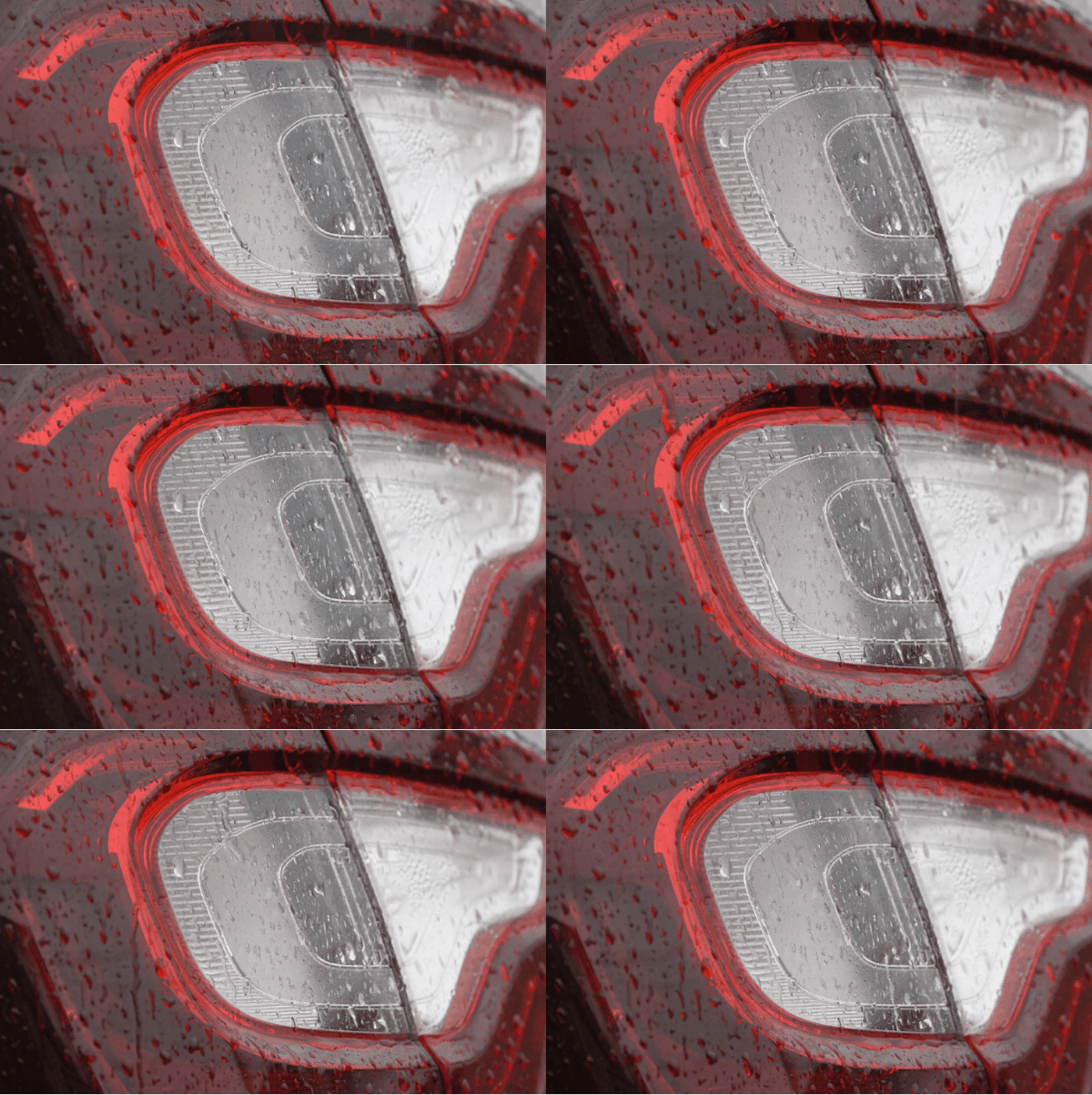
Acid rain forms when sulfur dioxide and nitrogen oxides mix with atmospheric moisture. This chemical reaction lowers the pH of the rainwater, making it mildly acidic. When that acidic moisture sits on your vehicle’s surface, it begins interacting with the clear coat.
Over time, this can lead to:
- Acid rain damage car paint issues like etching
- Clear coat oxidation
- Dullness and loss of gloss
- Mineral deposits and water etching
The danger isn’t usually immediate. It’s cumulative. Repeated exposure without protection slowly breaks down the clear coat, the very layer designed to shield your paint.
What Happens to Untreated Car Paint?
If your vehicle has no protective barrier, acid rain directly impacts the clear coat. Over time, you may notice:
- Rough texture on horizontal panels
- Faded or cloudy appearance
- Stubborn spotting that won’t wash off
- Microscopic cracking in the clear coat
Once etching penetrates deeply enough, paint correction becomes more intensive, and repainting may eventually be required. Preventative protection is far more affordable than corrective repairs.
What Is Ceramic Coating and How Does It Work?
The Science Behind Protective Nano Coating Technology
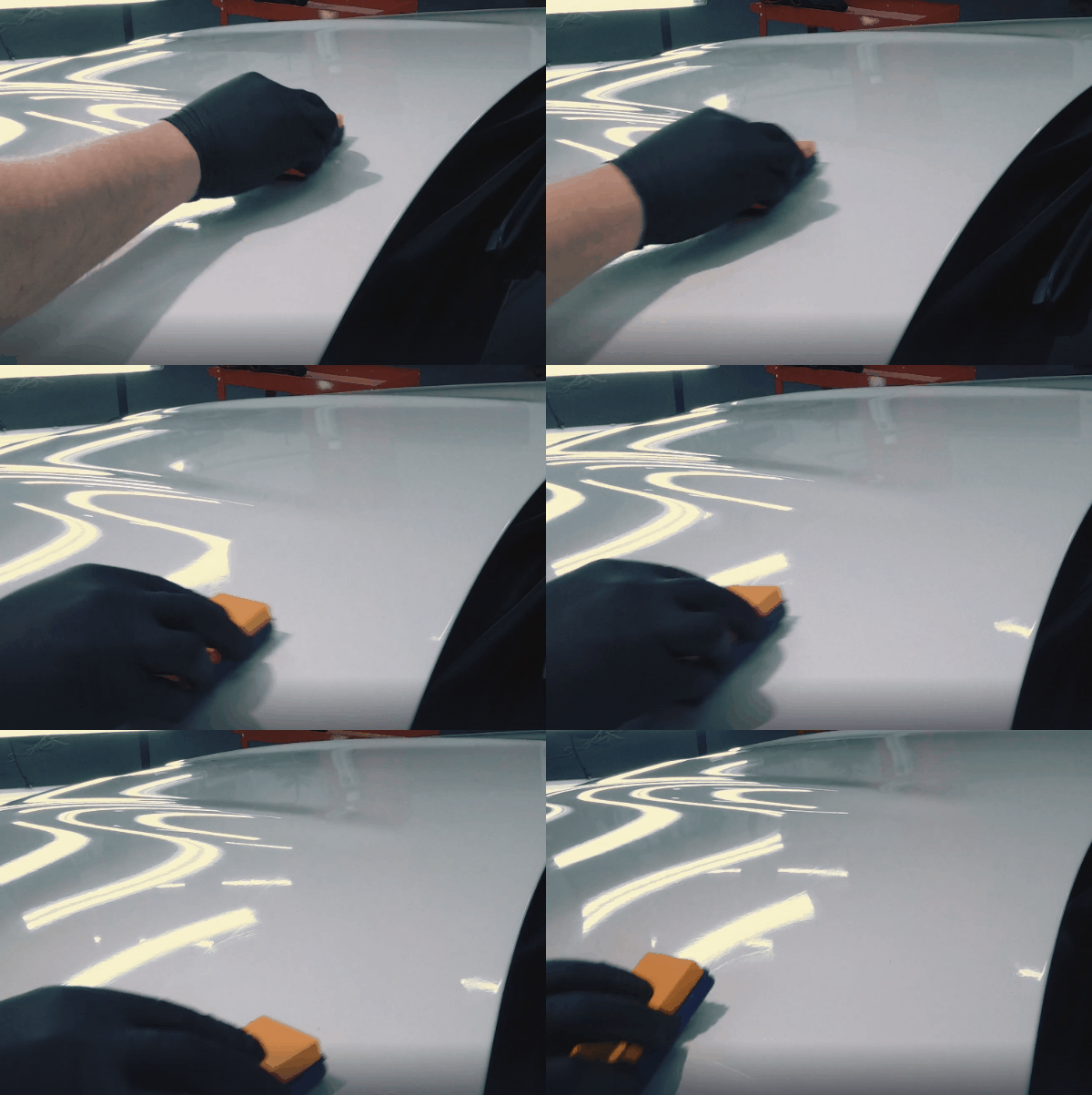
Ceramic coatings are liquid polymers primarily composed of silicon dioxide (SiO₂). When applied correctly, they chemically bond to your vehicle’s factory clear coat, forming a semi-permanent, chemical resistance coating.
Unlike wax, which simply sits on the surface, ceramic becomes part of the surface. That bond creates:
- Automotive clear coat protection
- UV protection for vehicle paint
- High-gloss finish protection
- Preventing paint etching from acidic exposure
This advanced protective nano coating technology is the reason ceramic coating for acid rain protection in Happy Valley provides significantly longer-lasting defense compared to traditional methods.
Hydrophobic Surface Protection Explained
One of the most visible benefits of ceramic coatings is hydrophobic surface protection. Water beads tightly and rolls off instead of spreading across the surface.
This matters because:
- Less water sitting on the surface means fewer mineral deposits
- Reduced bonding of contaminants
- Easier maintenance
- Fewer opportunities for water etching
If you’ve ever wondered how to prevent water spots on car surfaces during rainy seasons, the answer lies in limiting how long moisture can cling to the paint.
Why Is Ceramic Coating Effective Against Acid Rain Exposure?
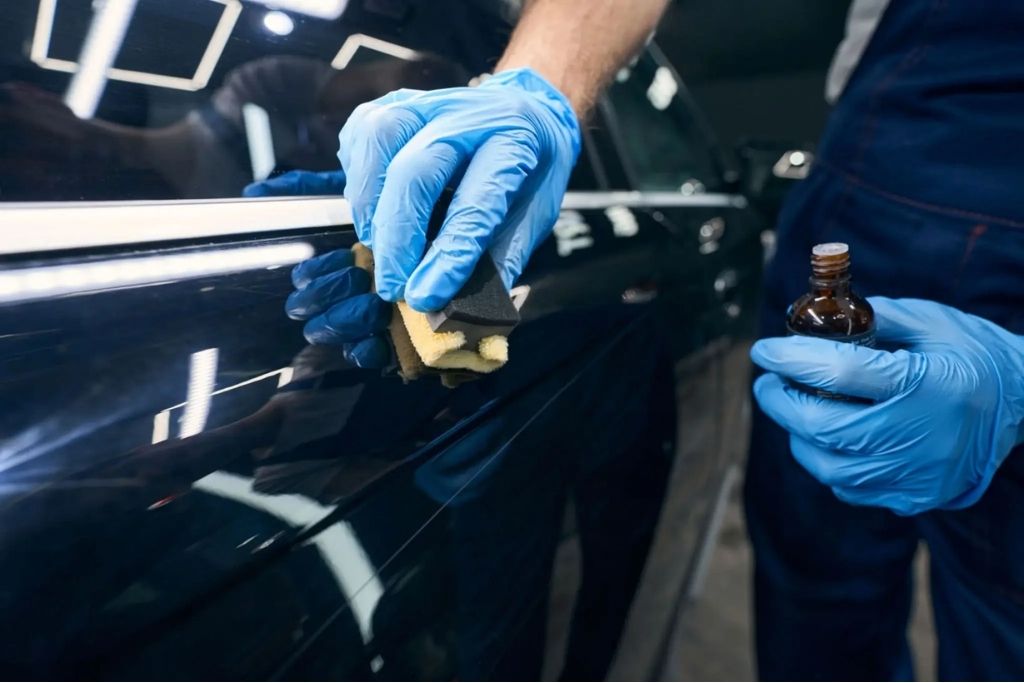
The key advantage of ceramic coating for acid rain protection in Happy Valley is chemical resistance. The bonded layer forms a durable shield that resists low-pH substances, reducing their ability to break down the clear coat.
Research and industry testing show ceramic coatings can reduce acid-related paint damage by as much as 80% when maintained properly. That’s a substantial difference in long-term preservation.
Beyond chemical resistance, ceramic coatings also provide:
- Enhanced gloss enhancement treatment results
- Protection against environmental fallout
- Improved ease of cleaning
- Greater surface slickness
In a region where rainfall is frequent, that level of defense makes a noticeable impact year after year.
Learn more about our professional ceramic car coating services and how we approach surface preparation.
Why Ceramic Coating Lasts Longer Than Traditional Wax
Many drivers still rely on wax, but wax simply cannot withstand repeated acidic exposure. It degrades quickly, often within a few months, especially in rainy climates.
Ceramic coatings, by contrast, can last 2-5 years or longer with proper maintenance. The difference comes down to bonding. Wax is temporary. Ceramic chemically integrates with the paint surface.
That’s why drivers seeking long-lasting car paint protection consistently choose ceramic coating for acid rain protection in Happy Valley instead of seasonal waxing.
Elevate Your Ride With

Maintenance Tips After Ceramic Coating in Happy Valley
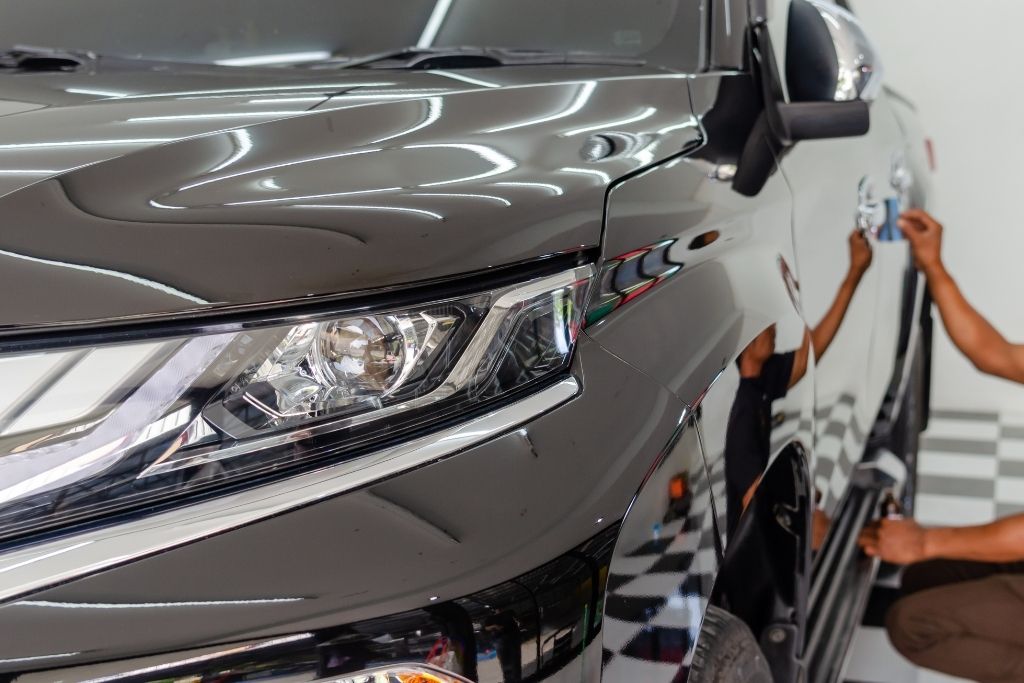
Even the best vehicle surface protection coating requires maintenance.
Initial Curing Period
For the first 24-48 hours, keep your vehicle dry and sheltered. This ensures the coating bonds properly and reaches optimal hardness.
Ongoing Care
To maintain ceramic coating for acid rain protection in Happy Valley, we recommend:
- Hand washing every 2-4 weeks
- Using pH-neutral shampoo
- Avoiding abrasive automatic brushes
- Applying a ceramic booster every 3-6 months
While ceramic coatings resist acidic damage, mineral spotting can still occur if water is allowed to dry repeatedly on the surface, especially in the first few weeks.
For more detailed post-installation guidance, read our blog on rain and fresh ceramic coatings in Happy Valley.
Final Thoughts: Is Ceramic Coating for Acid Rain Protection in Happy Valley Worth It?
Auto detailing is more than a cleaning service, it’s an investment in your vehicle’s appearance, protection, and longevity. If you’re looking for auto detailing in Happy Valley OR, trust the experts at The Detail Shoppe to deliver top-tier results with unmatched convenience.
Explore car detailing services in Happy Valley OR, protect your car with expert care, and enjoy that fresh, like-new feeling every time you drive.