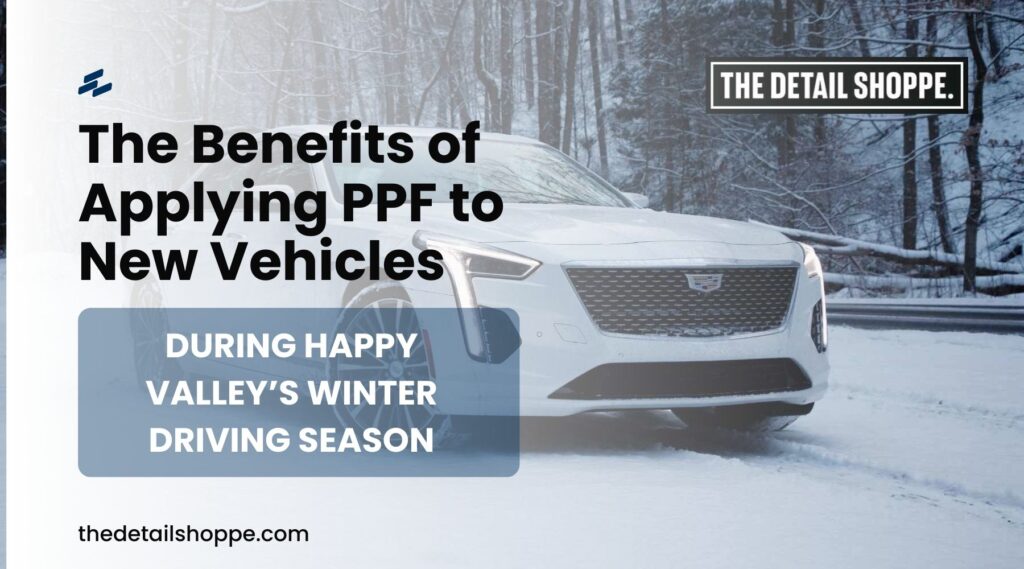
Winter in Happy Valley, Oregon, brings its share of challenges for vehicles, icy roads, road salt, gravel, and drastic temperature swings. For new car owners, these conditions can quickly take a toll on a freshly painted car. That’s where Paint Protection Film (PPF) becomes not just beneficial but essential.
In this blog, we explore the benefits of applying PPF to new vehicles during Happy Valley’s winter driving season, how it compares to other paint protection methods, and why it’s a smart investment for long-term vehicle care.
How Paint Protection Film Protects Your Car During Winter
Paint Protection Film (PPF) is a transparent, self-healing urethane layer that acts as a tough, yet invisible shield for your vehicle’s paint. Unlike waxes or ceramic coatings, which provide surface-level defense, PPF offers true physical protection against the harsh realities of winter driving, including rock chips, road salt, sand, and ice buildup.

In cold weather, PPF maintains flexibility, resisting cracking or peeling even through extreme freeze-thaw cycles. Its slick surface repels grime, snow, and salt, making winter cleaning easier and less abrasive.
At The Detail Shoppe, experienced technicians install PPF with surgical precision. Whether you choose a Partial Front, Full Front, or Full Body wrap, each application is custom-fitted to your vehicle’s most vulnerable areas, such as the hood, fenders, bumpers, and rocker panels, ensuring maximum winter defense without compromising your car’s appearance.
Why Winter Driving in Happy Valley Is Tough on New Vehicles
Happy Valley’s climate poses several threats to your vehicle’s paint:
❄️ Road Salt Corrosion
Roads are often treated with sodium chloride and magnesium chloride to combat ice. These chemicals are extremely corrosive, eating through the clear coat and the metal if not washed off promptly. PPF prevents direct contact, safeguarding your vehicle’s surfaces.
🪨 Rock Chips and Road Debris
Winter maintenance often leaves roads littered with gravel and sand, which gets kicked up by tires and chips away at unprotected paint. PPF absorbs these impacts, preserving your vehicle’s finish.
🌡 Freeze-Thaw Damage
Temperature swings in winter can cause paint to contract and expand, creating microcracks on exposed surfaces. PPF’s temperature-resistant properties help minimize this risk.
🧊 Ice, Snow, and Slush
Snow brushes, ice scrapers, and frozen buildup can all leave marks on your paint. PPF provides a durable buffer between your car and these winter necessities.
The Key Benefits of Applying PPF Before Winter
1. Shields Against Salt and De-Icers
One of the most important benefits of applying PPF is its ability to block corrosive agents used during winter. By preventing salt from penetrating the paint, you avoid long-term rust and oxidation.
2. Prevents Rock Chips and Scratches
PPF’s thermoplastic urethane composition absorbs impacts from gravel, sand, and debris, a common issue in Happy Valley’s snowy months. This keeps your car looking flawless, even on the roughest roads.
3. Weather-Resistant Durability
Modern PPF is engineered to withstand harsh temperatures without cracking or peeling, making it ideal for winter vehicle detailing in Happy Valley. It remains flexible and effective throughout the freeze-thaw cycle.
4. Easier Maintenance
The smooth surface of PPF makes it harder for snow, ice, and grime to stick. This reduces the frequency and effort required for winter car maintenance, and it minimizes the risk of scratching your paint during cleaning.
5. Self-Healing Properties
PPF can self-heal minor scratches and swirl marks using heat from the sun or warm water, a major plus when dealing with abrasions from snow brushes and road grime.
6. Preserves Your Car’s Resale Value
New cars depreciate quickly, but those with protected, original paint hold their value better. PPF helps retain that “like-new” appearance, making it a smart long-term investment.
Why New Vehicles Benefit the Most
If your car is fresh off the lot, applying PPF before its first winter helps keep the factory paint untouched by salt, gravel, UV rays, and other seasonal hazards. New paint is at its most pristine, and the best time to protect it is before any damage occurs.
Winter in Happy Valley introduces corrosive road treatments, flying debris, and fluctuating temperatures that can quickly degrade unprotected surfaces. By adding PPF early, you’re locking in that flawless finish, preventing costly repairs down the line, and avoiding early signs of wear like swirl marks, fading, or chipping.
Plus, well-maintained, original paint is a major factor in determining higher resale or trade-in value. Dealers and buyers alike recognize and appreciate vehicles that have been proactively protected.
Elevate Your Ride With

PPF vs. Waxing and Ceramic Coatings: What’s Best for Winter?
Many car owners in Happy Valley wonder if Paint Protection Film (PPF) is still necessary when their vehicle already has wax or ceramic coating. The short answer? Yes, and here’s why.
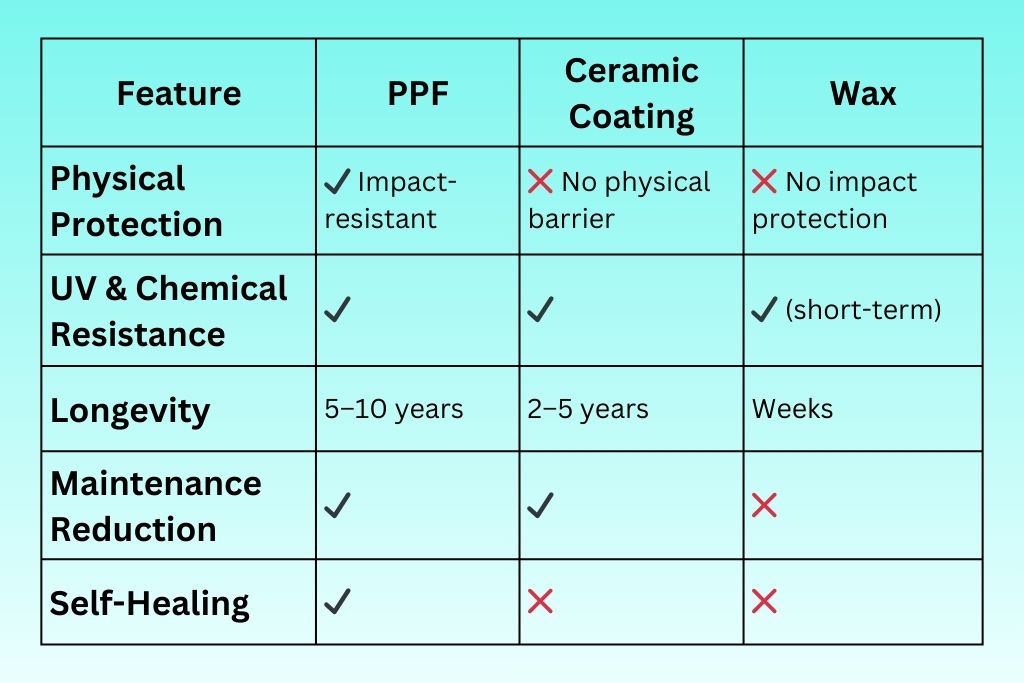
PPF excels at preventing rock chips, scratches, and salt damage, thanks to its durable, flexible surface, making it ideal for winter driving conditions. Meanwhile, ceramic coatings offer excellent hydrophobicity and UV resistance but lack the impact resistance of PPF.
Wax, while affordable and quick to apply, offers only temporary protection and is easily stripped away by road salt and washing.
For maximum winter defense, many car enthusiasts and professionals recommend combining PPF with a ceramic coating, protecting both the paint and the film itself for long-lasting shine and resilience.
Read more on combining PPF and ceramic coatings for the best of both worlds.
When and How to Apply PPF for Maximum Protection
For optimal results, apply Paint Protection Film before the first snowfall or road salt application, ideally in early to mid-fall. This ensures your vehicle is shielded from day one of winter driving.
Focus protection on high-impact areas that are most vulnerable to chips, scratches, and salt buildup, including:
- Front bumper, hood, and fenders
- Side mirrors and rocker panels
- Lower doors and wheel arches
These zones take the brunt of winter road conditions, and covering them helps preserve your car’s appearance and structural integrity.
At The Detail Shoppe, expert technicians offer three tailored PPF packages: Partial Front, Full Front, and Full Body wraps, using premium film designed to perform in cold climates. Each installation is precision-cut and professionally applied to ensure long-term adhesion, clean edges, and a seamless finish.
Book early to beat the winter rush and protect your investment before conditions worsen.
When and How to Apply PPF for Maximum Protection
At The Detail Shoppe, protecting your vehicle is more than a service; it’s a craft. Located in Happy Valley, OR, this locally owned business has built a strong reputation for high-quality PPF installations, combining cutting-edge materials with years of hands-on experience.

Their certified technicians are trained to work on all vehicle types, from daily drivers to luxury and performance cars, ensuring a seamless, paint-matching finish that enhances both protection and appearance. Each installation is performed in a climate-controlled space, using computer-cut templates and advanced application techniques to eliminate imperfections like bubbles or edge lifting, even in tough winter conditions.
Clients also benefit from transparent pricing, strong warranty coverage, and personalized service that makes the process easy from start to finish.
Whether you’re a daily commuter braving the snowy backroads or a new car owner who wants to keep that showroom shine intact, PPF from The Detail Shoppe is a smart investment in long-term vehicle care.
Don’t wait until the first snowfall. Request your quote today and drive through winter with confidence.
Final Thoughts
If you’re wondering how to protect your car’s exterior in winter, there’s no better solution than high-quality Paint Protection Film. Beyond just preserving your vehicle’s appearance, PPF offers real functional value, shielding your paint from road salt, gravel, slush, and fluctuating temperatures that can lead to rust, chips, and fading.
For new vehicles, applying PPF before winter hits is one of the smartest steps you can take to maintain long-term value, reduce maintenance costs, and enjoy peace of mind all season long.
In Happy Valley’s harsh winter climate, proactive protection isn’t just a luxury; it’s a necessity.
Ready to protect your investment? Get in touch with The Detail Shoppe and drive confidently into winter.
FAQ: Common Questions About PPF Longevity
Is paint protection film worth it on a new car?
Absolutely. New cars have fresh paint with no damage. PPF preserves that factory finish, ensuring it stays pristine through its most vulnerable early years.
How long does paint protection film last?
With professional installation and proper care, PPF can last between 5 and 10 years.
Why does road salt damage vehicle paint?
Salt accelerates oxidation, leading to rust and bubbling paint, especially around wheel wells and undercarriage areas.
Why does road salt damage vehicle paint?
Wax wears off quickly and doesn’t protect against impact. PPF creates a durable, impact-resistant shield ideal for harsh winter driving conditions.